
BSc. Applied Geosciences
Further Information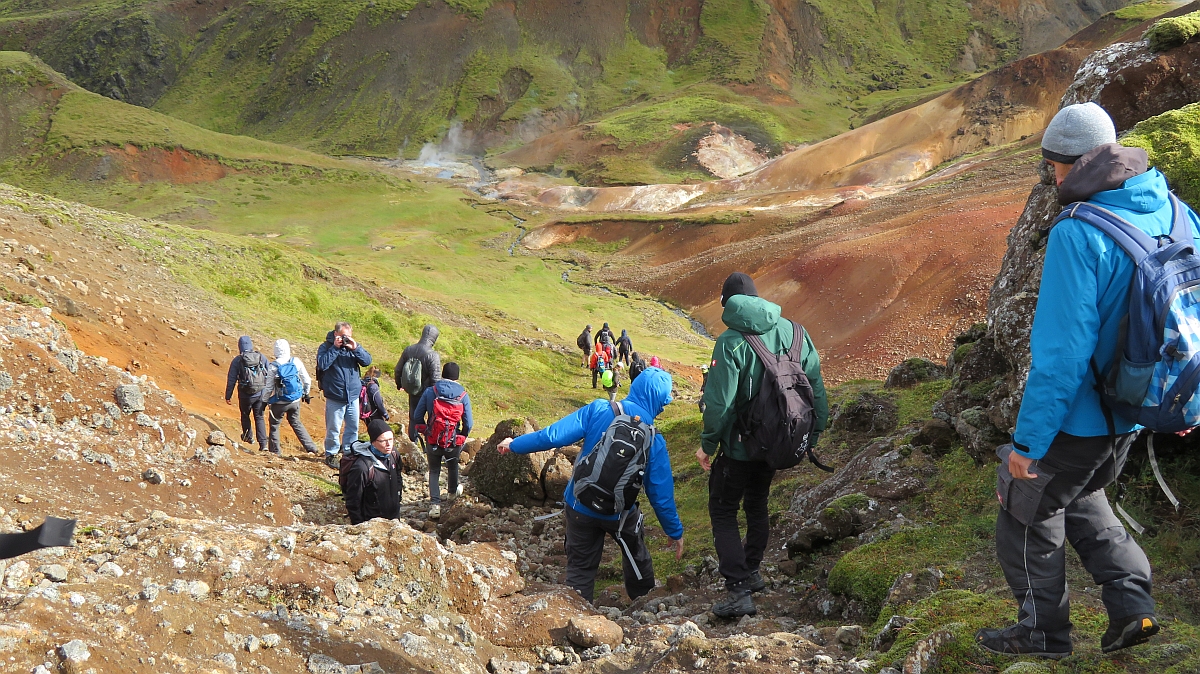
We welcome you to our 3-year BSc program in Applied Geosciences at KIT. Our applied degree program, part of the Faculty of Civil, Geo, and Environmental Engineering, focuses on the sustainable use of the environment, both on and below the Earth’s surface.
During the Bachelor’s program in Applied Geosciences at KIT, you’ll get to know your instructors personally. We impart knowledge through numerous small-group exercises, and you’ll apply what you’ve learned on field trips lasting one or more days. The Applied Geosciences program at KIT, a university of excellence, offers you the best conditions for developing your career opportunities.
MSc. Applied Geosciences
Further Information
The four-semester master’s program in “Applied Geosciences” at KIT is designed to provide a practice- and research-oriented degree in the following three thematic areas: (1) Sustainable Energy, Raw Materials, and Storage; (2) Engineering and Hydrogeology; and (3) Mineralogy and Geochemistry.
„Sustainable Energy, Raw Materials and Storage"
In the “Sustainable Energy, Raw Materials, and Storage” track, students explore the sustainable use of geenergy, georesources, and raw materials, and gain a deep understanding of major infrastructure developments such as geostorage facilities and geothermal power plants. Our graduates are able to analyze and evaluate the Earth system and actively contribute to ensuring a sustainable supply of energy and raw materials. They can develop sustainable solutions for the energy transition, future raw material supplies, and relevant storage infrastructure, and thrive in an international and interdisciplinary environment.
"Engineering- and Hydrogeology"
In the “Engineering and Hydrogeology” track, graduates master all the classic methods relevant to engineering and hydrogeology, as well as near-surface geothermal energy, both in theory and in practical application. In addition to field and laboratory methods, the program covers numerical modeling of groundwater flow, heat and mass transport in the subsurface, and geomechanical processes. They can assess groundwater resources in terms of quantity and quality and are familiar with the key approaches to their use and sustainable protection, taking ecosystems into account—from drinking water supply to thermal groundwater use.
„Mineralogy and Geochemistry"
In the “Mineralogy and Geochemistry” track, students gain an in-depth understanding of the building blocks of the Earth—minerals, rocks, and soils—as well as their structural composition and chemical makeup. Graduates gain deep insight into state-of-the-art analytical techniques, the functioning of various measurement methods, and the development of new analytical methods. They are able to perform a wide range of analytical techniques (e.g., spectroscopy, SEM, LA-ICP-MS, AFM, wet chemistry, etc.) and develop, as well as interpret and model the results. They have extensive knowledge of the flow of elements within and between the pedosphere, hydrosphere, biosphere, atmosphere, and anthroposphere, and the impacts on the environment and humans.
The two-year MSc program requires 120 credit points (LP/CPs / ECTS), with typically 30 LP per semester.
In addition to the master’s thesis (30 LP), the program consists of a “Geoscience Specialization” track with a required component worth 20 LP and a required elective component worth 50 LP, as well as a “Subject-Specific Supplement” track worth 20 LP.
Distinctive Features of the Program
- Research-oriented teaching
- Involvement of students in current research projects
- Excellent academic environment
- Close contact with faculty and research staff
- Numerous multi-day field trips in Germany and abroad
- State-of-the-art laboratory facilities
- Top Rankings
- Career-relevant key competencies
- KIT's membership in the EUCOR university network allows all KIT students to take courses at the universities of Freiburg, Basel, Strasbourg, Colmar, and Mulhouse
Wide range of student organizations - Opportunities for part-time jobs at research institutes and laboratories
Learning Objectives
The in-depth academic training provided in the three tracks enables graduates to describe and interpret the specific characteristics, terminology, scholarly perspectives, and limitations of the core subject areas and elective courses; to summarize the current state of research; and to contribute to its further development in specific areas. Their broad knowledge enables them to think interdisciplinarily and examine topics from various perspectives. They are prepared to apply computer-based methods in practice. They can take a nuanced approach to complex problems, information, and current requirements, and—using appropriate methods and concepts—analyze, compare, evaluate, and implement them, even as part of a team. You will be able to engage in academic discourse and take on leadership roles, even within an international team. You will be exceptionally well-qualified for careers in industry, the service sector, or public administration, as well as for an academic career (Ph.D.).
Career Prospects
After completing your degree in Applied Geosciences, you’ll have a wide range of career opportunities in engineering firms, consulting firms, or other sectors of industry (construction, mining, the oil industry, drilling companies, water utilities), as well as with government agencies, public offices, and associations. The range of activities extends from renewable energy, groundwater development and protection, to contaminated site investigation and remediation, raw material prospecting and exploration, the prediction and prevention of natural disasters, and environmental protection issues. In addition to entering the workforce directly, those with an excellent master’s degree may also pursue a Ph.D., which can lead to a future career in research and teaching, for example.